The Rat Race, The Lady Vanishes
The Rat Race (5/26/60)
A bitter 1949 play from Garson Kanin (Born Yesterday), transposed to film with the cadence of the stage, which isn’t a bad thing. Scenes unwind in their own sweet time — the director is Robert Mulligan, on his second feature, with To Kill a Mockingbird and a string of significant 1960s dramas imminent — as midwestern saxophonist Tony Curtis has his upbeat nature tested by the cruelties of Manhattan. Debbie Reynolds is having it rough, too, as a dancer-model who can’t make rent. Desperate, these young strangers end up sharing a cramped flat. It’s a comic premise, but Kanin’s serious. New York sucks, especially for starving artists.
Reynolds is terrific in this downbeat situation, clinging to her dignity, living on the edge and in hock to the mean and skeevy Don Rickles, who’s trying to press her into prostitution. She’s hip to the wicked city, while smiling Curtis is naïve enough to think he’s lucked into quality goods when street mooks sell him an “overstock” mink for cheap. That’s nothing compared to the sting when a handful of jazz musicians invite him for an audition; saxophonist Gerry Mulligan and the picture’s composer, Elmer Bernstein (who creates a rumbly, menacing jazz theme), give the long scene musical authenticity as the cats play, and when they twist the knife it’s a gruesome scam that’s too vivid not to have been true. The taxi dancer details are also good, as when the camera catches a guy nibbling a woman’s shoulder and she simply has to take it: a gateway to hell.
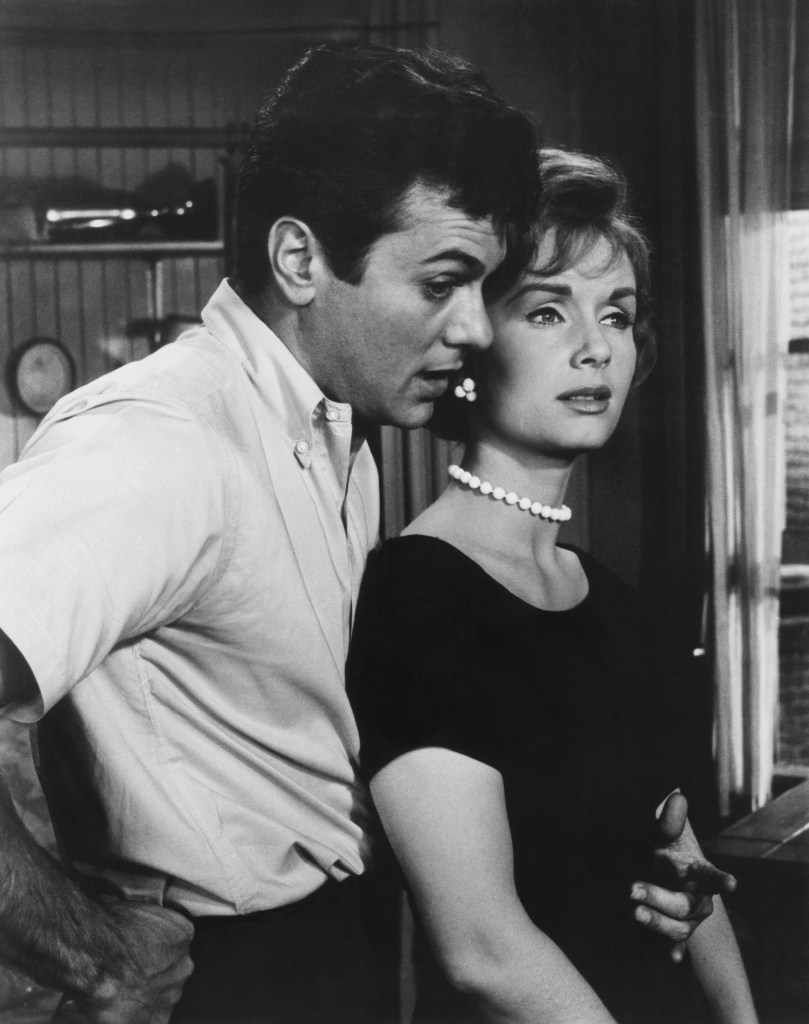
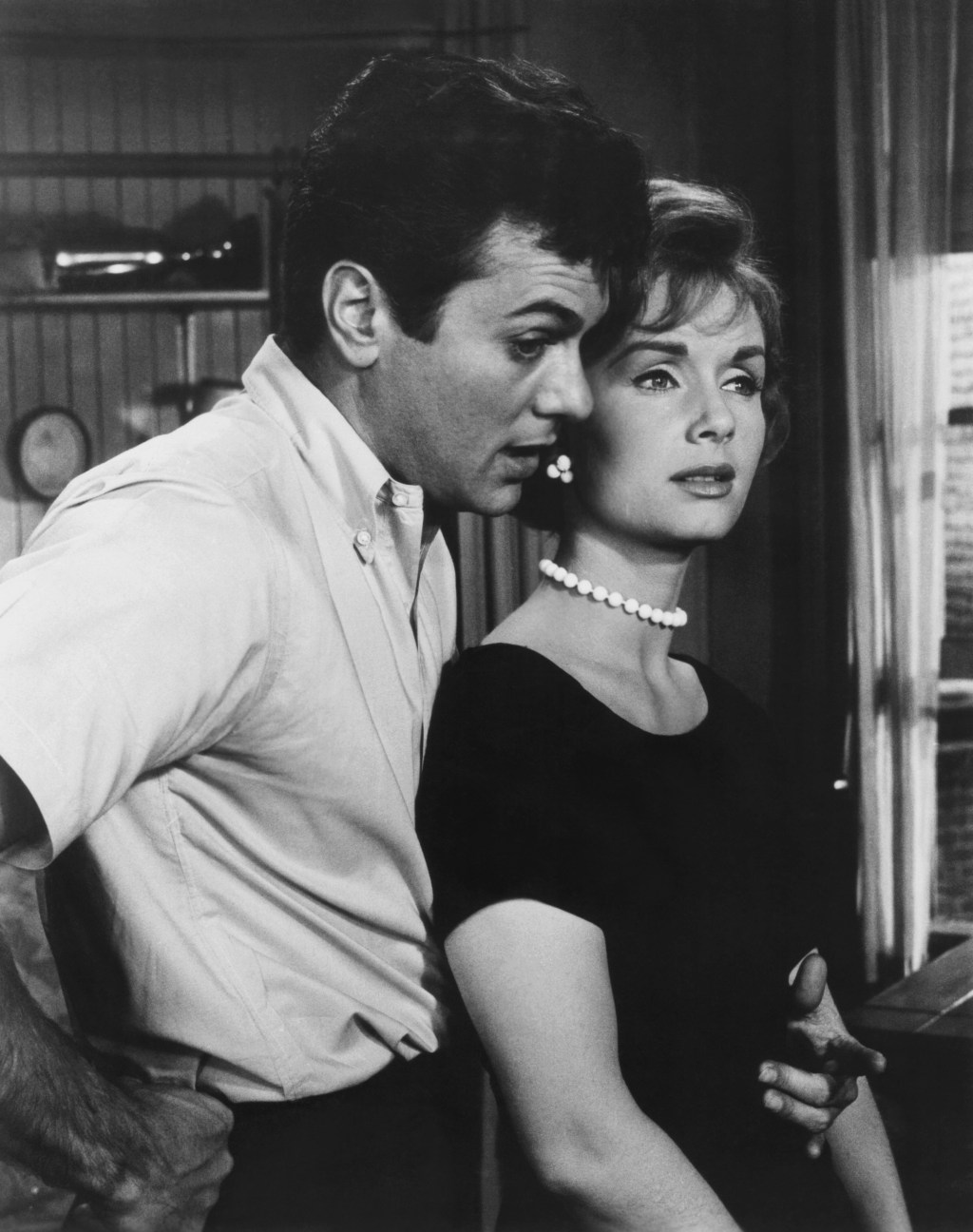
Mulligan, soon forming a literate dramatic partnership with producer Alan J. Pakula for Mockingbird, Love with the Proper Stranger (1963), Baby, the Rain Must Fall and Inside Daisy Clover (both 1965), Up the Down Staircase (1967) and The Stalking Moon (1968), shows early strength establishing character, letting Reynolds and Curtis underplay, listen, think, react, all possible because Kanin’s dialogue is a solid cut above. The scenes are not without hammy aspects and sentimental impulses, especially toward the end, and secondary characters have shiny, actable Broadway veneers, namely Kay Medford’s rich turn as the wiseacre landlady. Describing this makes it sound like a black and white, and the best available stills from the flick would seem to confirm that (see above, with Curtis and Reynolds mulling it over). But it’s in color, perhaps most notably in the tangerine-tinged red lipstick on the unsinkable Reynolds’s determined mouth.
Twin it with Edward Dmytryk’s 1962 A Walk on the Wild Side, grittier and pulpier, a black and white melodrama all the way, with another muscular Elmer Bernstein score as wholesome cowpoke Laurence Harvey and rowdy runaway Jane Fonda get tangled in dangerous Barbara Stanwyck’s New Orleans bordello. For more early ’60s jazz n’ drama, tune in to The Subterraneans (1960, with saxophonist Gerry Mulligan on screen again in the adaptation of a Jack Kerouac story), Ocean’s 11 (1960, Rat Packers on the loose), Too Late Blues (John Cassavetes, 1961, with Bobby Darin as pianist and Stella Stevens as a could-be singer, and following Cassavetes’s earlier Shadows, with music by Charles Mingus), British Beat Girl (1961, score by John Barry), Paris Blues (1961, Paul Newman as a saxophonist, Sidney Poitier on trombone, Louis Armstrong as himself), All Night Long (1962, with hep musicians getting sucked into the full Othello plot) … and so many more. This mid-century phase often featured a hot smorgasbord of true jazz, not ersatz stuff — sinuous, suggestive, blasting, exuberant accents for stories with edge.
The Lady Vanishes (5/8/79)
More Hitchcock — this is in cinemas days after Jonathan Demme’s Last Embrace, which has Roy Scheider wafting through a spot of North By Northwest-ish, Psycho-flecked vertigo — as British stage and screen director Anthony Page revives Hitchcock’s 1938 comic thriller with better results than you might expect. Cybill Shepherd is front and center, trying to rejuvenate her career after the rollercoaster of credits with paramour Peter Bogdanovich, and she’s surprisingly good here as the madcap American heiress stuck for the duration of the adventure in a slinky white gown. If that garment seems lifted from Marilyn Monroe in The Seven Year Itch, well, the script is by Itch playwright George Axelrod, screen adaptor of Breakfast at Tiffany’s and The Manchurian Candidate. This impish Lady Vanishes borrows minor flavors from both those flicks as it flitters through its thirty-nine or so steps.
Amanda, Shepherd’s screwball character, is cool and flip and talks fast, so someone matched her well with her offbeat co-star, Elliott Gould, playing a photojournalist (though he carries no camera) who’s cowardly but wry. The palaver in the ’38 Hitchcock moved at a clip, too, and the cast overall in the original gets the edge on this remake, partly because Hitch’s puckish wit was a good deal further forward than Page’s is here. Yet the support includes Herbert Lom (the twitchy comic foil to blithe Clouseau in Blake Edwards’s currently popular Pink Panther franchise), precise and plummy as a mysterious doctor, and Angela Lansbury as the English nanny who goes missing on a Bavarian train, with only Shepherd’s plucky Amanda seeming to notice or care. (The original starred Dame May Whitty as the governess, Margaret Lockwood as the determined ingenue and Michael Redgrave as the dapper musicologist who helps snoop. Recommended.)
Good and evil are more crisply drawn in the update, with Nazis posing the threat; the movie opens with carefree Amanda offering a tavern her Hitler impersonation. This gives cinematographer Douglas Slocombe a dry run for his upcoming Raiders of the Lost Ark as Nazis in bars, on streets and on the train supply general menace, and as the train chugs through the Alps while Shepherd and Gould find themselves in knife fights and gunfights. It’s not a great remake, but this version now dwells so far under the radar — and the tenor of the available contemporary reviews is not good — that you expect it to be a mess.
Yet it’s not. Maybe the tepid reception was because Shepherd wasn’t cool yet, with her Moonlighting TV breakthrough still several years away. Maybe it was because Gould spread himself so thin, making his twenty-second picture since M*A*S*H at the beginning of the decade. Maybe it was because the plush Murder on the Orient Express (1974) and Death on the Nile (1978, with Lansbury in the all-star cast) already cornered an up-tone Agatha Christie vibe. Maybe it’s because Brian De Palma, with Obsession (1976, like De Palma’s Carrie, and boasting one of Hitchcock stalwart Bernard Herrmann’s final movie scores) on his resume and Dressed to Kill (1980), Blow Out (1981), and Body Double (1984) dead ahead, was strenuously willing himself into position as a new Hitch.
In any event, Shepherd, Gould, Lansbury and Lom make pro comic work of it. If Shepherd’s elocution is not always exacting, she has the valuable gift of being daffy and glamorous at once. Her screwball determination is delightfully light and fierce, starting with her entrance atop a café table, sporting a diamond necklace, ruby lipstick, elegant white opera gloves to match the striking backless dress, and, under her nose, a fat square smudge — the Hitler mustache. Gould is firmly amused/amusing; the grand Lansbury is the English nanny archetype itself; and Lom delivers elegance and menace in calm strokes.
Watch with Gould as Marlowe in Robert Altman’s hedonistic L.A. The Long Goodbye (1973) or playing cat-and-mouse with a wicked Christopher Plummer in The Silent Partner (1978); revisit Shepherd twirling Jeff Bridges around her finger in The Last Picture Show (1971), or pursue the sleuthing groove with Silver Bears (1977), starring Shepherd and Michael Caine (plus Tom Smothers and Jay Leno in supporting roles) in a based-on-real-events finance caper.

 Nelson Pressley