Friday Foster, Aaron Loves Angela
Friday Foster (12/26/75)
A Pam Grier joint with too little Pam. You watch now and want a thoughtful re-do, a juicy reboot, something to imaginatively exploit the title character’s style (she’s a former model), profession (photojournalist for a glam magazine), and cheek (the plot involves a friend’s murder, and Friday’s by God going to get to the bottom of it).
Friday Foster was a comparatively short-lived comic strip from 1970-74, devised by writer Jim Lawrence (at the time also scripting a James Bond strip, and also with Nancy Drew and Hardy Boys credits); the white writer felt the comics market might make room for a Black female subject. Spanish illustrator Jordi Longarón drew the strip, with the collaborators communicating by transatlantic mail. Flipping through the 2021 book Friday Foster: The Sunday Strips, the panels are dynamic and the mood is très mod in scenes at nightclubs, fashion shows, hip apartments, edgy streets. You could maybe make a movie.
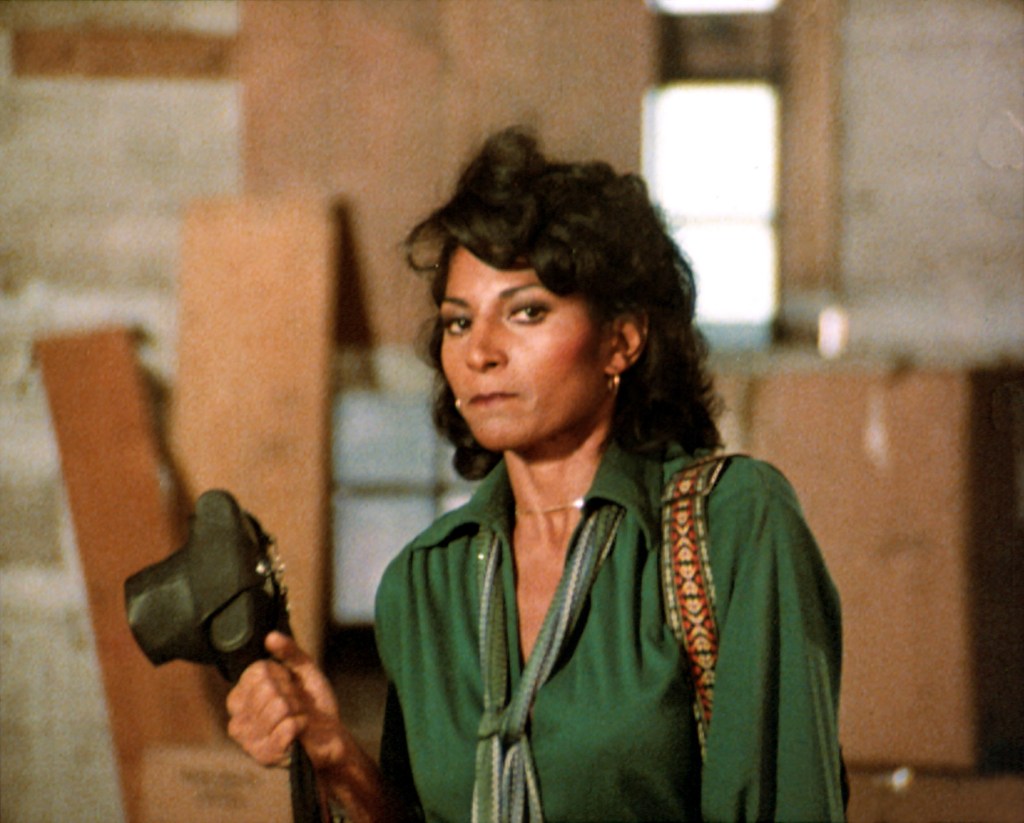
What director Arthur Marks made is a comparatively easygoing entry in the fast-fading Blaxploitation genre, with a script by Orville H. Hampton, an Oscar nominee for co-writing the pensive 1964 interracial romance, One Potato, Two Potato (recommended, starring Bernie Hamilton and Barbara Barrie). Grier is silky and tough as Friday, cute in scenes with her winsome, hustling adolescent brother (Tierre Turner) and defiant with her editor (gruff Julius Harris). Weaseling through airport security to catch a celebrity photo of America’s wealthiest Black man (Thalmus Rasulala), Friday stumbles into his apparent assassination, which seems connected to her friend’s murder. The plot bounces her between L.A. and Washington, where rich Jim Backus is secretly bankrolling a Black senator (Paul Benjamin) as part of a perverse scheme to undermine the growing unity among Black American leaders.
Potentially interesting, but the 90 minute flick spends less time fleshing out the conspiracy than driving by D.C. landmarks and ogling Friday’s inevitable romantic tumbles, plus spreading the screen time across its likable ensemble cast. Yaphet Kotto is a genial detective and Friday’s “main man” love interest; Eartha Kitt is a rumble of purrs and snarls as a fashion maven; Carl Weathers glides as shadowy hit man; Godfrey Cambridge preens as an imperious gay figure central to the fashion-political nexus; Scatman Crothers beams wolfishly an influential pastor with an eye for Friday; Jason Bernard sports owlish glasses and pursed lips as a bookish, sinister mastermind; Ted Lange is a cheerful pimp jive talking with the kid brother for access to Friday.
There were thoughts of making Friday Foster a TV series, and this thinly spread scenario suggests the makings. But as a movie, it misses its opportunities, flattening the strip’s visual sensibility and squandering chief asset Grier, who’s classy and determined but gets too few chances to live up to the movie’s promotional line: Wham! Bam! Here Comes Pam!
Fascinating corollary, though:
Martha Southgate’s 2005 novel Third Girl from the Left chronicles a young Black woman who flees dull Tulsa for L.A. and gets bit parts in a handful of Blaxploitation movies, including one with an appreciative Grier. Southgate, a journalist who once wrote for the U.S. movie magazine Premiere (published from 1987-2007), beautifully crafts a tale knitting the 1921 Tulsa race massacre with ’70s movies and a generation beyond, as the sometime actress’s daughter picks up a camera herself. The internet teases a 2013 report of a potential Third Girl movie adaptation with Viola Davis and Kerry Washington. If only.
Southgate writes knowingly of Hollywood, and seems to plead gloriously guilty to film nerdship. On one devastating page she shrewdly recaps a violent scene from Grier’s Foxy Brown, acidly framing the genre’s coiled power.
Also released this Christmas week:
Aaron Loves Angela (12/26/75)
After 1974’s Thomasine and Bushrod and Three the Hard Way, director Gordon Parks, Jr. is back in his Super Fly milieu, only with two high schoolers in love and all but doomed by the drug apparatus dominating their Harlem neighborhood. The titular kids are very sweetly rendered by Irene Cara, making her movie debut, and Kevin Hooks, the older son in Sounder (and son of actor Robert Hooks, who plays the stylish, menacing drug kingpin here).
Moses Gunn is Aaron’s boozy father, a bitter ex-NFL player whose wife left him; he runs a bar and counsels his basketball-playing son to rack up points so he can make NBA money. (The kid is more realistic: “I can’t make myself grow,” he says.) Knicks superstar Walt Frazier, in his high fashion mode as “Clyde,” makes a cameo appearance, draped in a fur coat and stepping into a limo as he counsels young Aaron that with work, he can be whatever he wants to be.
Parks again gets great visual mileage from the city, indelibly utilizing a condemned building that figures in the plot — the secret meeting place for our pups in love, and a good spot for a bad drug deal. Adding textures: rampant graffiti, lush outdoor murals, crowded transit, the MOMA sculpture garden. Even chase scenes get a certain lyricism, filmed from high above — and note an early sequence with Hooks and a pal walking as the camera tracks them alongside a block of cinemas, where Jim Brown features among the stars on the action-packed marquee.
Cara’s delicacy as Angela is touching, and it clearly disarms Hooks’s Aaron, who is essentially forthright as the kid dealing with his foul-tempered dad and a sex-for-brains best pal. The writing doesn’t always give the couple the dialogue they need, but the actors, and patient Parks, make them grounded and believable anyway. The gentleness between Hooks and Cara — their solid connection as two bright, lonely youngsters, like recognizing like — defines the movie.
The ending is sheer upbeat wish fulfillment as Aaron gets the better of the drug kingpins on his tail, but after Parks’s haunting, fatalistic final image in Super Fly, you’ll take it. The original music by Jose Feliciano (who makes a cameo appearance playing in a small club) gives Parks another distinctive sound — not as renowned as Curtis Mayfield’s in Super Fly, but earthy, lively, right in key with this tale of young hearts on mean streets.

